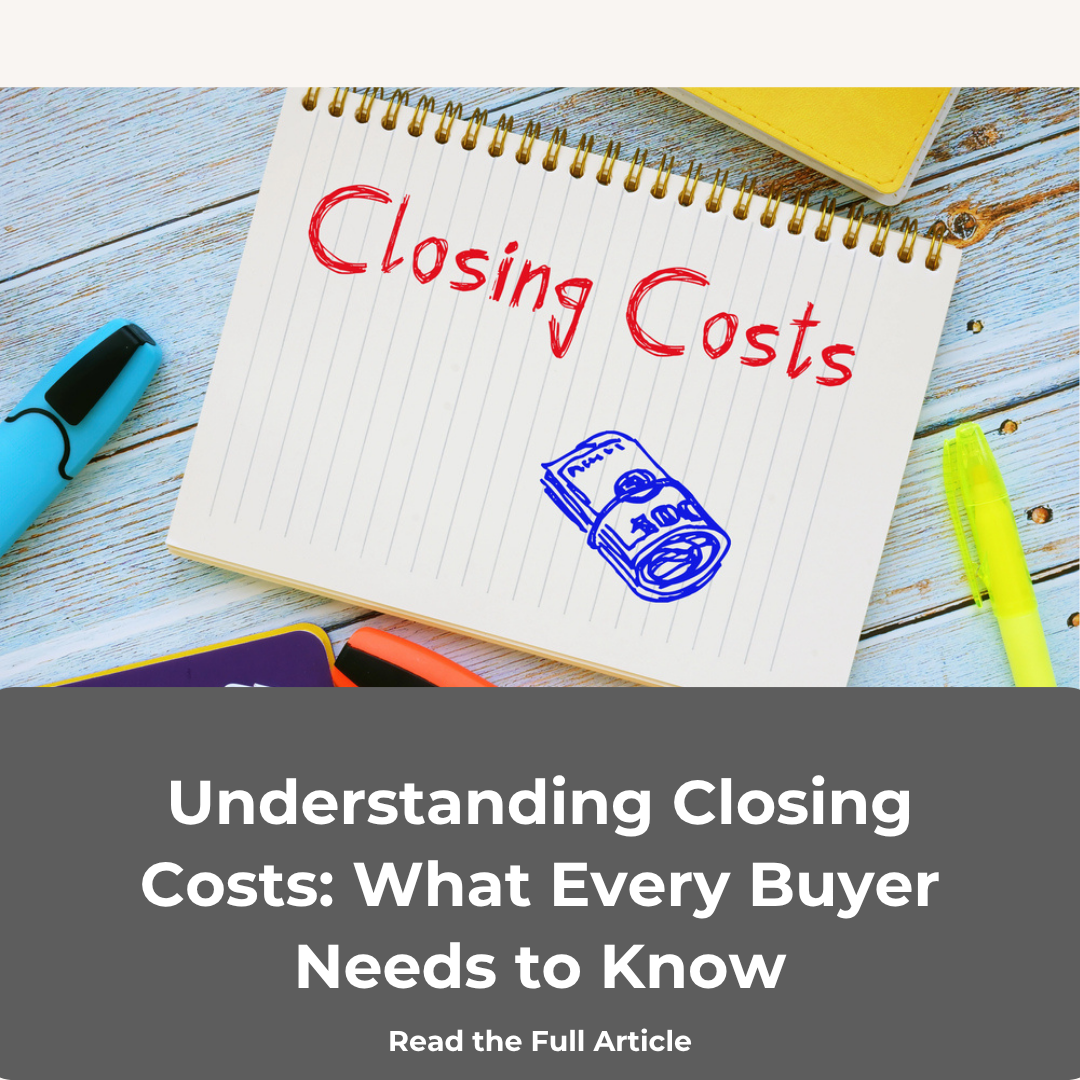
For most buyers, closing costs are the least understood part of the home-buying process.
These fees can feel overwhelming, unpredictable, and even a little scary if you're not prepared.
Many buyers are caught off guard by the number of items that make up their closing costs, which can quickly add up to thousands of dollars.
I sure didn’t know what went into closing costs when we bought our first house - or even our third!
Now, as a Realtor, I’ve learned a lot.
To help you, the buyer, feel more informed and prepared, I’ve put together this list of everything that goes into closing costs.
This article breaks it all down so you can approach the closing table with confidence, plan accordingly, and know exactly how much money it will take to buy your dream home.
1. Loan-Related Costs
- Loan Origination Fee: A fee charged by the lender for processing the loan (typically 0.5%-1% of the loan amount).
- Credit Report Fee: Cost to pull the buyer’s credit report (around 25−50).
- Underwriting Fee: Fee for the lender to evaluate and approve the loan application.
- Discount Points: Optional upfront payment to lower the mortgage interest rate (1 point = 1% of the loan amount).
- Application Fee: Charged by some lenders to process the loan application.
2. Prepaid Costs (Escrow Reserves)
- Property Taxes: A portion of property taxes may need to be prepaid (usually 2-6 months' worth).
- Homeowner’s Insurance: The first year’s premium is typically paid upfront.
- Mortgage Insurance Premium (if applicable): Required if the down payment is less than 20% of the home price.
- Prepaid Interest: Interest for the period between closing and the start of the mortgage payment.
3. Title and Escrow Fees
- Owner’s Title Insurance: Protects the buyer from title issues (optional in some cases).
- Lender’s Title Insurance: Protects the lender; usually required.
- Escrow Fee: The cost of the neutral third party managing the funds and closing process.
- Title Search Fee: Covers the cost of searching public records to verify the title's validity.
4. Government Fees
- Recording Fees: Charged by local governments to record the sale and transfer of the title (varies by county).
- Transfer Taxes: Taxes imposed by the state, county, or city for transferring property ownership.
5. Inspections and Appraisals
- Home Inspection Fee: Paid for a professional inspection of the property (around $300 - $500).
- Appraisal Fee: Required by the lender to determine the home’s value (around $400 − $600).
- Pest Inspection Fee: Sometimes required, especially in areas prone to termites (around 50 − $150).
6. Closing Attorney
- Closing Attorney Fee: In Georgia, an attorney is required to prepare and oversee the closing.
7. HOA Fees (if applicable)
- HOA Transfer Fee: Charged by the homeowners’ association to transfer ownership.
- HOA Dues: Prorated fees for the month of closing.
8. Miscellaneous Costs
- Survey Fee: Covers the cost of verifying property boundaries (around
- Courier/Notary Fees: For handling and delivering documents (around $50 - $100).
- Flood Certification Fee: Determines if the property is in a flood zone (around $15 - $25).
Typical Total Closing Costs for Buyers
Closing costs typically range from 2% to 5% of the home’s purchase price.
For a $450,000 home, closing costs would be anywhere between $9,000 to $22,500 depending on location, lender, and specific terms of the transaction.
Buyers should request a Loan Estimate from their lender to get an exact breakdown of their closing costs.
Have more questions about closing costs or the home-buying process? Feel free to contact me for more details.
I’m here to help you every step of the way!


 ©2026 Georgia Multiple Listing Service All information deemed reliable but not guaranteed. All properties are subject to prior sale, change or withdrawal. Neither listing broker(s) or information provider(s) shall be responsible for any typographical errors, misinformation, misprints and shall be held totally harmless. Listing(s) information is provided for consumer's personal, non-commercial use and may not be used for any purpose other than to identify prospective properties consumers may
 Listings identified with the FMLS IDX logo come from FMLS and are held by brokerage firms other than the owner of this website. The listing brokerage is identified in any listing details. Information is deemed reliable but is not guaranteed. If you believe any FMLS listing contains material that infringes your copyrighted work please